Is My Tree Dangerous? 5 Warning Signs a Tree Needs Immediate Removal
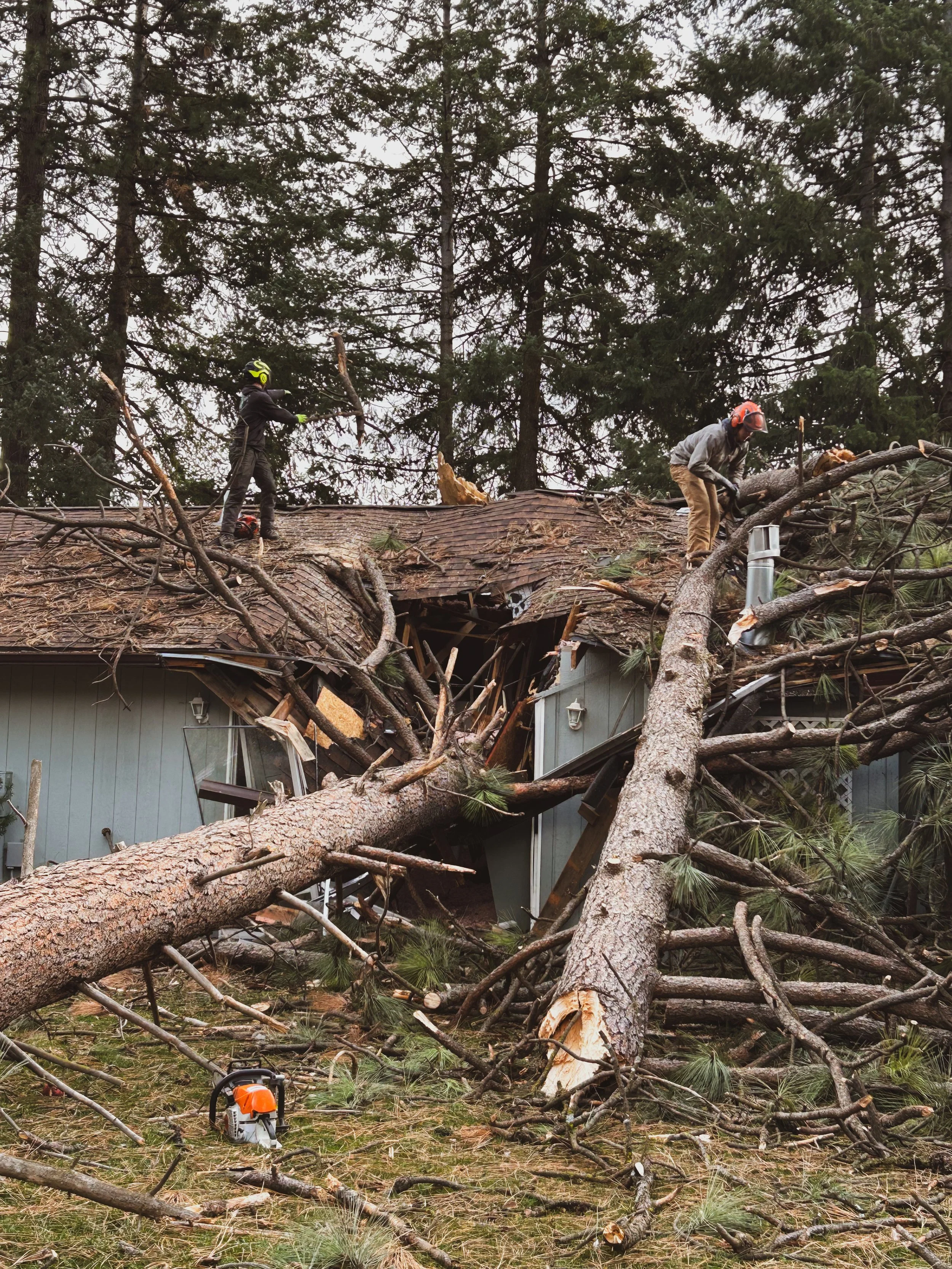
Living in the Inland Northwest means enjoying towering Ponderosa pines, stately Douglas firs, and lush canopy cover throughout our neighborhoods. But between severe summer windstorms sweeping across the Spokane Valley and heavy winter snow accumulation in Coeur d’Alene, trees face immense environmental stress.
A structurally compromised tree can turn from a beautiful landscape asset into a severe property hazard in seconds. Knowing how to identify early warning signs allows you to take action before high winds or heavy snow cause catastrophic failure. This guide outlines the top 5 signs your tree poses an immediate risk, key diagnostic steps, and answers to common homeowner questions.
5 Critical Warning Signs of a Hazardous Tree
While some tree failures happen unexpectedly during extreme weather, most dangerous trees display clear warning signs long before they fall. Keep an eye out for these five critical indicators:
1. Fresh Soil Heaving or Root Plate Lifting
If the ground around the base of your tree is cracking, bulging, or lifting upward, the root plate has severed its hold in the soil. This usually occurs after heavy rains followed by high winds. A tree with a lifting root plate is in imminent danger of total uprooting and requires immediate professional intervention.
2. Large Vertical Cracks and Split Trunks
Deep vertical splits running down the main trunk or through the junction where two major stems meet (known as a V-shaped crotch) signal structural failure. When ice or wind exerts pressure on these existing cracks, the tree can split completely in half.
3. Internal Decay, Fungal Growth, and Hollow Trunks
Conk mushrooms, shelf fungi, or clusters of toadstools growing directly on the trunk or around the root flare indicate advanced internal rot. While trees can survive with minor hollow spots, extensive fungal growth means the interior wood strength has been compromised by decay.
4. Large Hanging "Widowmaker" Branches
Severed, cracked, or broken limbs suspended high in the upper canopy are known as "widowmakers" for a reason. These heavy branches can dislodge without warning during mild breezes, posing severe danger to pedestrians, vehicles, and roofs below.
5. Sudden or Severe Lean Toward Structures
Trees rarely grow perfectly straight, and a gradual lean over decades is usually natural. However, if a tree suddenly develops a pronounced lean—especially toward your home, driveway, power lines, or deck—its structural balance has failed.
Frequently Asked Questions
How do I know if my tree is dead or just dormant?
To check if a tree is dead or dormant during off-seasons, perform a simple scratch test. Use your thumbnail or a small pocket knife to scrape a tiny fleck of bark off a young twig. If the layer beneath is moist and green, the branch is alive. If it is dry, brittle, and brown throughout multiple branches across the canopy, the tree is likely dead.
What does soil lifting at the base mean?
Soil lifting at the base means the subterranean anchoring roots have snapped or pulled free from the surrounding earth. This is a critical structural emergency indicating that the tree can no longer support its own weight and could fall at any moment.
Can a split or cracked tree trunk be saved?
In some cases, minor cracks or co-dominant stems can be stabilized using professional structural cabling and bracing systems combined with targeted crown reduction. However, if the crack extends deep into the main trunk or involves internal rot, complete removal is usually the only safe option.
Actionable Steps for Homeowners: What to Do If You Suspect Danger
If you spot any of these warning signs on your property, follow these practical safety steps immediately:
1. Establish a Safe Drop Zone
Keep family members, pets, and vehicles away from the perimeter beneath the tree. If a large limb or leaning trunk threatens a parked vehicle, move it immediately if it is safe to do so.
2. Take Clear Photos for Documentation
Document the tree's condition from multiple angles, focusing on visible cracks, fungal growth, or soil heaving. This documentation is crucial if you need to submit a claim to your home insurance provider following storm damage.
3. Avoid DIY Removal Attempts
Attempting to fell a compromised or leaning tree with a personal chainsaw is extremely dangerous. Hazardous trees are under unpredictable tension, and a wrong cut can cause "barber-chairing" (where the trunk splits vertically and kicks back violently) or unpredictable falls onto adjacent structures.
4. Schedule a Professional Diagnostic Inspection
Contact a certified arborist to perform a full structural evaluation. Professional crews use specialized rigging, bucket trucks, and cranes to dismantle dangerous trees piece-by-piece without damaging surrounding lawns or structures.
5. Check for Overhead Power Line Clearance
Protect Your Property: Schedule a Local Tree Hazard Inspection
Never attempt to trim or touch branches that are making contact with or growing within 10 feet of power lines. Call your local utility company or a licensed tree service certified for line clearance immediately.
When it comes to tree health and structural safety, acting early is always safer and more cost-effective than dealing with emergency storm damage. If you notice split trunks, fungal growth, or sudden soil heaving on your property, don't wait for the next windstorm to test your tree's strength. Contact our local team today to schedule a professional hazard tree evaluation across Spokane and Coeur d’Alene—we’ll keep your property safe, clean, and fully protected year-round.
